Daily planning
How Many Tasks Should You Put on Your To-Do List Each Day?
In this article
- Why task count is a poor measure of workload
- Start with the day that's already booked
- Give your tasks rough sizes
- Use one main outcome as a starting point
- What about the 1-3-5 rule?
- A worked example: choosing a realistic Monday
- Leave space for work you can't predict
- Check your estimates against actual experience
- Separate commitments from optional extras
- What if you finish early?
- What if you finish almost nothing?
- Account for energy as well as hours
- A short daily workload template
- Questions about daily task counts
- Sources and further reading
- Related reading
A list of three tasks can be completely unrealistic. A list of twelve can be perfectly manageable. It depends on whether the items are “write a dissertation chapter” or “send the address”. Counting the lines doesn't tell you how much day they require.
There's no research-backed magic number of tasks for a daily to-do list. A practical starting experiment is one substantial outcome and two smaller tasks, adjusted for appointments, routine responsibilities, energy, and interruptions. Treat that as a trial workload, not a rule you're supposed to meet.
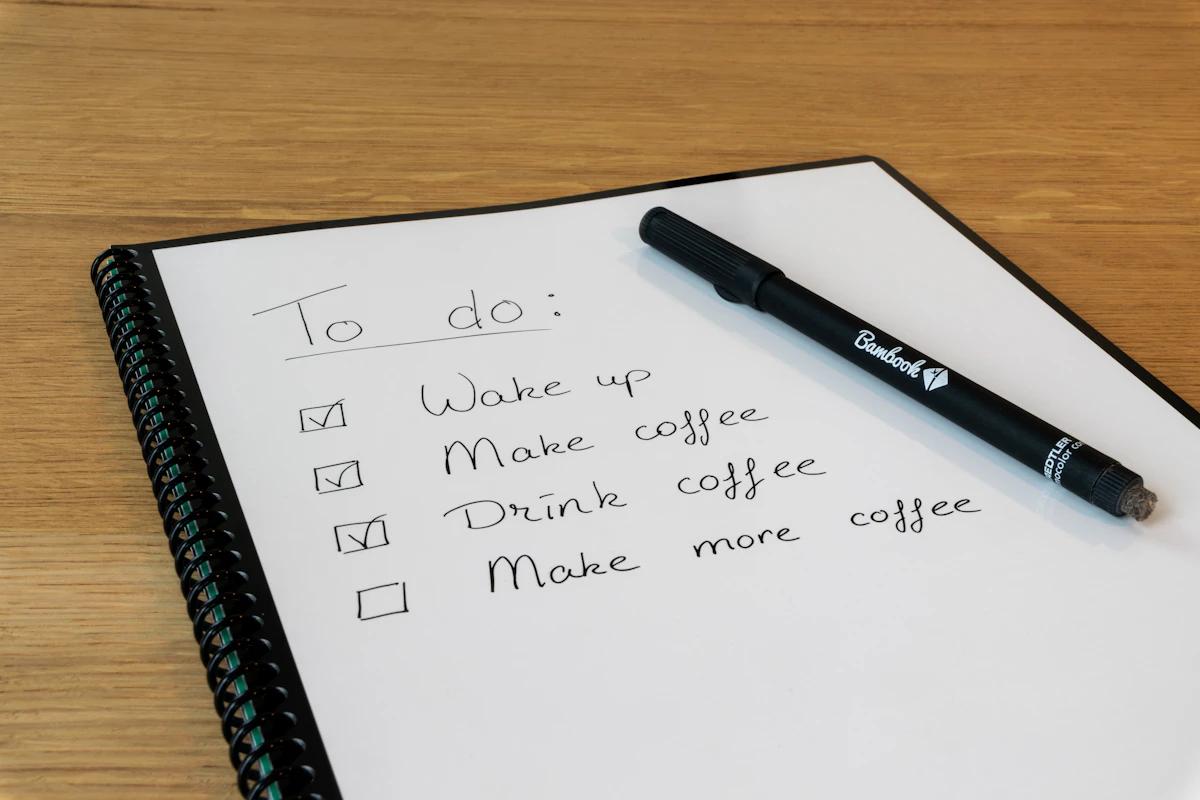
The better question is: what combination of work can reasonably fit today? Here's how to answer it without turning the morning into an exercise in estimating every minute.
Why task count is a poor measure of workload
Tasks vary in duration, complexity, emotional effort, and dependence on other people. Calling to book an appointment could take two minutes or involve several transfers and a callback. Writing a paragraph may be straightforward; deciding what the paragraph should say may not be.
The way you write the list changes the count too. “Prepare presentation” is one line. “Choose argument, find evidence, draft slides, check figures, rehearse” is five. The workload hasn't magically increased because you described it more honestly.
Counts can be useful within a stable routine. If you process similar requests every day, past throughput can inform tomorrow's plan. But comparing a mixed personal list with someone else's number tells you very little.
A daily list should help you choose and remember work. It doesn't need to function as a productivity score. If you split an activity into smaller steps because that helps you start, you don't have to worry that the extra checkmarks are somehow cheating.
Start with the day that's already booked
Look at appointments, classes, shifts, travel, meals, and care responsibilities before selecting optional work. These use capacity whether or not you call them tasks. A calendar with four meetings is not an eight-hour writing day.
Include transitions where they matter. Finishing a meeting, finding your place, and opening the right files can take time. So can getting to the shop, waiting in a queue, and putting groceries away. A plan that includes only the central action will be too optimistic.
Suppose you have a six-hour period while someone else handles childcare. Two appointments and their travel take three hours. Lunch and a necessary errand take another hour. You have roughly two hours left, not six.
You don't need to account for every sip of water. The purpose is to identify the large commitments that change what will fit. The WashU Learning Center's planning guidance similarly emphasizes building a schedule that reflects your actual circumstances.
Give your tasks rough sizes
Use a few broad categories rather than exact predictions. For example: a brief action, a moderate session, and a substantial piece of work. You can add an approximate range if you have useful experience with the task.
“Reply to the invitation” might be a brief action. “Review the draft and leave comments” might need a moderate session. “Build the first version of the presentation” may require several sessions and should be planned as pieces rather than a single daily checkbox.
Don't confuse familiarity with short duration. You may know exactly how to clean the kitchen, but it still takes time. Similarly, a new task can be short while requiring more concentration than a familiar one.
For unfamiliar work, include a discovery step. “Open the application and list the required documents” gives you information before you promise to finish the whole application this afternoon. Unknown work deserves room for uncertainty.
Use one main outcome as a starting point
If you don't know how much to choose, start with one outcome that would make the day meaningfully easier or move something important forward. Then add necessary maintenance and a small amount of lighter work if capacity remains.
An outcome is more useful than an aspiration. “Make progress on the website” is hard to evaluate. “Draft the text for the contact page” gives the session an endpoint. It can still be rough and incomplete at the project level.
One main outcome doesn't mean doing only one thing all day. It means deciding what shouldn't disappear under the small requests. Meals, messages, appointments, and household responsibilities still happen around it.
If choosing the outcome is the hard part, use how to prioritize tasks when everything feels important. This article deals with capacity after you've identified the work that deserves attention.
What about the 1-3-5 rule?
The 1-3-5 rule suggests planning one large task, three medium tasks, and five small tasks. Some people find that mix easy to remember. Others find nine tasks far too much for a day with meetings, care work, or limited energy.
Treat it as a list-shaping convention, not a scientific prescription. “Large” and “small” aren't standardized units. One person's small task is another person's difficult phone call with an hour of preparation.
You can borrow the idea of mixing sizes without keeping the numbers. One substantial task and two smaller ones may fit. So might three medium tasks, or a single essential appointment and recovery time.
No published evidence cited here establishes a universal ideal daily count. A meta-analysis of time management examines broader relationships with outcomes, not whether everyone should complete a particular number of checkboxes.
A worked example: choosing a realistic Monday
Imagine Monday includes a team meeting from ten to eleven, a lunch break, and a school pickup that ends the working afternoon. After routine work and transitions, you estimate about three hours for chosen tasks.
Your candidates are a proposal draft, a supplier call, an expense claim, a full inbox clear-out, and research for a future purchase. The proposal is important this week. The call unlocks information you need. The purchase research can wait.
You choose a ninety-minute proposal session with a defined target: a rough argument and the main sections. You allow a separate window for the supplier call and its notes. The expense claim is the smaller task if the first two go roughly as expected.
You don't fill the remaining time in advance. It covers the meeting running over, a longer call, or a break. If it stays available, you can choose another small action later. Unassigned time is a way to keep the plan honest, not proof that you're being unambitious.
By the end of the day, perhaps the supplier doesn't answer. You leave a message, record the follow-up, and count your available action as done. The outcome is pending, but you haven't failed to make the call.
The plan contains three chosen tasks. On another Monday, the same three labels could be too much because the proposal needs deep revision or pickup is earlier. The number is the result of the capacity decision, not the starting constraint.
Leave space for work you can't predict
Some roles have a steady stream of incoming demands. Support work, caregiving, operations, and management can make a tightly packed task list unrealistic before the day begins. Use your own recent days to estimate how much planned work survives.
If half your afternoon is usually taken by incoming requests, don't schedule the whole afternoon as protected project time. You may still want to change that arrangement, but today's list should reflect the current reality.
Avoid arbitrary rules like always scheduling exactly sixty percent of your time. A buffer needs to match the setting. A day of familiar solo work and a day on call have very different uncertainty.
Our guide to planning your day with interruptions offers a flexible structure for this. A separate “incoming work” note can also make invisible work visible when you review the day or discuss capacity with someone else.
Check your estimates against actual experience
You don't need permanent time tracking to learn something useful. For a few days, note the rough duration of one or two recurring activities. Include setup and completion, not just the part where you were actively typing.
Compare “I thought this would take twenty minutes” with “it usually takes about forty when I include finding the files”. Then use the more realistic figure next time. The observation should improve the plan, not become a reason to criticize yourself.
The classic planning fallacy research examined optimistic predictions and the tendency to focus on imagined plans rather than past experience. For everyday planning, looking at similar completed work is a useful corrective to a best-case story.
Record unusual circumstances too. A task that took three hours because the website was down shouldn't automatically become a three-hour task forever. Use a range and a short note about the source of uncertainty.
Separate commitments from optional extras
A list becomes discouraging when every idea looks equally promised. Use a clear distinction between the work you're choosing and things you might do if time remains. Optional work should remain optional at the end of the day.
You might use headings such as “Today” and “If there's room”. Keep the second section short or out of sight if it distracts you. Its purpose is to offer a choice when you finish early, not to create a hidden second quota.
Your longer backlog belongs somewhere else. It can hold tomorrow's errands, future projects, and ideas without implying that all of them are overdue now. A brain dump can help capture those thoughts before you make a smaller selection.
In Interval, Inbox can hold what you've captured while the day view shows what you've chosen. Explore the features if that separation would help. Two lists in a notebook work too; you don't need a new app to try the distinction.
What if you finish early?
Finishing the planned work early doesn't mean the plan was wrong. You may have estimated conservatively, encountered fewer interruptions, or completed a task more easily than expected. That's useful information.
Pause before automatically adding more. Is there an important task that would benefit from the time? Would taking a proper break help the rest of the day? Are you borrowing energy from tomorrow by continuing?
If you add work, choose deliberately from the backlog. Don't open several new projects because the original list looks empty. A clear end can be valuable, particularly when work tends to expand into every available hour.
If you consistently finish early and want to do more, increase the workload gradually. Add a modest piece of work and see whether the plan still feels realistic across ordinary days, not just your best day of the month.
What if you finish almost nothing?
First, ask what actually happened. Did you respond to an urgent situation, care for someone, attend appointments, or handle work that never reached the list? That counts as capacity used, even if the planned checkboxes stayed empty.
If you spent the day struggling to begin, task clarity or difficulty may be the issue. Shrinking the count won't help much if the remaining item is “fix my life”. Rewrite it as a concrete action, using our guide to getting started.
If the plan repeatedly exceeds your capacity, reduce the next day's workload before adding another productivity technique. If the mismatch comes from demands you can't change alone, discuss scope or support with the relevant person.
Persistent difficulties with attention or functioning may deserve professional support. The NHS information on adult ADHD can help you understand one possible avenue, but an unfinished list on its own isn't evidence of a diagnosis.
Account for energy as well as hours
An open afternoon doesn't always provide four hours of demanding work. Poor sleep, illness, emotional strain, and a physically tiring morning can change what is reasonable. Capacity is more than an empty calendar.
Consider the type of work rather than ranking yourself as energetic or lazy. You might be able to do familiar admin but not a difficult analysis. Or you might have enough concentration for one important task while household work needs to wait.
Use a lower-demand version of the plan when appropriate. Planning a low-energy day explores how to choose a minimum, a flexible task, and deliberate deferrals. It doesn't ask you to make rest conditional on completing enough work.
If unexplained tiredness persists or affects daily life, the NHS advises seeking medical advice. A scheduling adjustment isn't a substitute for understanding an ongoing health problem.
A short daily workload template
Write these answers in a few lines. The template is meant to reduce decisions, not add a second planning session.
- Already committed: appointments, essential routines, travel, and care.
- Available capacity: the realistic periods left for chosen work.
- Main outcome: one concrete result that matters today.
- Necessary smaller actions: only what fits around that outcome.
- Room for uncertainty: time or flexibility you haven't promised away.
- Optional next choice: one thing to consider if capacity remains.
At the end of the day, add one observation. “The call took longer than expected” is more useful than “bad day”. After a week, look for patterns in estimates, interruptions, and the size of your main outcome.
Don't turn the observations into a complicated score. You're trying to answer “What fits?” with better evidence. A daily plan that you can revise is more useful than a rigid target you keep missing.
Questions about daily task counts
Is three tasks a day enough?
It can be. Three meaningful tasks may represent a full day of work, and one may be enough alongside significant responsibilities. Judge the plan by the work and capacity involved, not by how impressive the number sounds.
Should I put meals and routine tasks on the list?
Include them when visibility or reminders help. You don't have to list every routine activity, but you do need to account for its time. If seeing essential care on a list feels supportive, it belongs there.
Should unfinished tasks move automatically to tomorrow?
Only after checking whether they still matter and fit. Carrying every task forward can create a growing daily backlog. Choose what to reschedule, simplify, delegate where possible, or remove. An unfinished task is a decision to revisit, not an automatic addition to tomorrow's capacity.
How long should the daily list take to make?
Long enough to choose realistic work, short enough that planning doesn't become the main activity. A few minutes may be sufficient for a familiar day. A complex day may need more thought. The useful stopping point is a clear next action and an honest workload.
Tomorrow, try planning from available capacity before you count tasks. The right number is whatever remains after the day, the work, and your needs have had a say.
Sources and further reading
- WashU Learning Center: time management and productivity strategiesPractical university guidance on realistic schedules and priorities.
- Aeon, Faber & Panaccio: Does time management work?Open-access meta-analysis in PLOS ONE; not a test of Interval or these templates.
- Buehler, Griffin and Ross: Exploring the Planning FallacyOriginal research paper hosted by a university; PDF.
- NHS: ADHD in adultsInformation about symptoms, getting help, and available support.
- NHS: tiredness and fatigueHealth guidance on persistent tiredness and when to seek medical advice.